
Guests / Different worlds. Shared digital lives.

Your experience.
Someone’s next step.

Researchers, public servants, founders, industry practitioners and community voices: bring the perspective only you can bring.

Prepare a guest pitch ↗

The guest experience

Real stories.
Practical takeaways.

Each conversation starts with one big idea and ends with a routine listeners can try. We welcome researchers, public servants, founders, practitioners and people whose everyday experience offers a useful perspective.

A relaxed conversation of about 45 minutes.

We record remotely and send the question guide about a week ahead. We edit for flow, and you can flag anything to remove during or after recording. When an episode is scheduled, we confirm the release date and send a share kit the day before it goes live. Recording date and platform are agreed with each guest.

4 possible conversations

Different voices.
Better questions.

These are the conversations we hope to explore. Guest appearances are not confirmed.

01 / Homelab · Possible pairing

From homelab to habit: learning security by doing ↗

George Ferres and Rob Newport explore how safe, hands-on experiments can turn curiosity into everyday digital resilience.

Portrait of George Ferres

George Ferres

Australian cybersecurity consultant, TAFE teacher and homelab speaker

George Ferres is an Australian cybersecurity consultant and TAFE teacher. He brings hands-on security work and homelab experiments into the classroom and conference community.

LinkedIn profile ↗
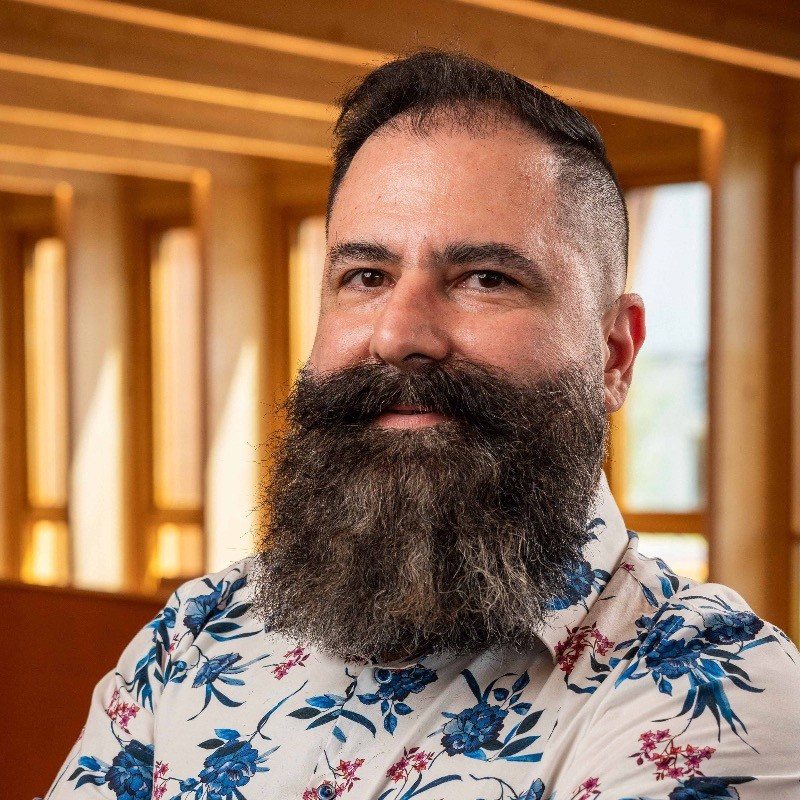
Portrait of Rob Newport

Rob Newport

Machine-learning scientist and developer

Rob Newport is a machine-learning scientist and developer. His work includes custom API and mobile applications, with research in medical image processing, eye-tracking and computational analysis of expert visual judgement.

LinkedIn profile ↗


02 / CISO interviews · Possible pairing

Security habits a team can actually keep ↗

Hank Opdam and Marco Figueroa compare the security routines that survive real budgets, busy teams and competing priorities.

Portrait of Hank Opdam

Hank Opdam

Fractional CISO and cyber-risk adviser

Hank Opdam advises organisations on cyber risk and security leadership, including fractional CISO work. He has also served as CISO at Ausgrid.

LinkedIn profile ↗
Portrait of Marco Figueroa

Marco Figueroa

Sydney-based cybersecurity executive and CISO

Marco Figueroa is a Sydney-based cybersecurity executive and CISO. His work spans technology risk, privacy, compliance, security awareness and communication across complex organisations.

LinkedIn profile ↗
03 / Incident response · Possible pairing

From threat signal to everyday habit ↗

Ray Goh and Kinga Fil connect incident response, cloud security and the small routines that make recovery more manageable.

Portrait of Ray Goh

Ray Goh

Threat detection and incident-response practitioner

Ray Goh works across threat detection and incident response, including endpoint forensics and threat hunting with Cloudflare's security incident response team.

LinkedIn profile ↗
Portrait of Kinga Fil

Kinga Fil

Cloud and Kubernetes security engineer

Kinga Fil is a cloud and Kubernetes security engineer. Her work focuses on securing code, workloads and software supply chains.

LinkedIn profile ↗
07 / Academia & research · Possible pairing

From research to everyday digital resilience ↗

Dr Ali Amrollahi and Kenny Zhong connect research, strategy and lived experience to practical digital-resilience habits people can sustain.

Portrait of Dr Ali Amrollahi

Dr Ali Amrollahi

Senior Lecturer and information systems researcher

Dr Ali Amrollahi is a Senior Lecturer at Macquarie Business School. His research covers digital work, technology governance, digital innovation and strategy, including the organisational and social effects of emerging technologies.

LinkedIn profile ↗
Portrait of Kenny Zhong

Kenny Zhong

Digital Resilience Advocate and Founder of Routine Resilience

Kenny Zhong is a Digital Resilience Advocate and Founder of Routine Resilience. Through the show, he brings research, policy, industry and community perspectives together to explore practical alternatives to repetitive approaches to digital resilience.

LinkedIn profile ↗

Perspectives we welcome

A seat for
different experiences.

Explore the perspectives we welcome and the questions that could start a conversation.

Six lenses for conversations about digital resilience, from research and policy to everyday life.

A starting point, not a script

Come with a story.
Leave room for curiosity.

01 / Before

Find the human story.

Think of a moment that changed how you approach digital life. A lesson is more useful than a perfect answer.

02 / During

Make it concrete.

Bring an example you can comfortably share. Keep confidential details and other people’s personal information out of the story.

03 / After

Offer one useful step.

What small action could someone try in a routine they already have? That’s a good place to end.

Do I need to work in cybersecurity?

No. The show welcomes perspectives from research, public service, business, startups, community and everyday life.

Are recording details fixed?

No. The planned conversation is about 45 minutes. Recording platform and date are agreed directly with each guest.

Does saving a pitch send an application?

No. It downloads a text draft to your device.

A sample café-owner conversation

One working day.
One habit worth keeping.

Use the café’s real routines as the story. Keep the tone curious and practical, never blame-led or alarmist.

  1. 00:00–05:00 / Welcome

    Start with the person.

    “Before the first coffee goes out, what has to work for the day to begin?” Introduce the guest and the promise: one useful idea for a busy small business.

  2. 05:00–13:00 / The day in motion

    Map the digital moments.

    “Where do screens, payments, orders, bookings or staff handovers fit into a normal shift?” Let the owner choose what is relevant; don’t assume a particular point-of-sale or delivery system.

  3. 13:00–23:00 / A moment that changed something

    Hear the human story.

    “Was there a small hiccup or near miss that changed how you do things?” Ask what they learned. Leave out customer details, passwords, vendor access and any confidential incident information.

  4. 23:00–32:00 / Rethink the usual advice

    Find what fits the shop.

    “What security advice felt too big or too generic for a small café?” Explore workload, cost, who owns each step, and which routines are already working.

  5. 32:00–40:00 / Build one repeatable habit

    Attach it to an existing cue.

    “What is one small action you could pair with opening, a shift handover or closing?” Make it specific, quick to repeat and realistic on a busy day.

  6. 40:00–45:00 / Close with a next step

    Leave listeners with something usable.

    “What would you tell another owner who has no IT team?” Summarise the habit, thank the guest and close with the show’s everyday-resilience promise.

Pre-recording check: agree what can be discussed; avoid revealing staff, customer, payment or supplier information. The guest receives questions about a week ahead, can request edits during or after recording, and receives a share kit the day before release.

Start with an idea

Your next
conversation.

Prepare a guest pitch to keep for later. This form downloads a text file and does not send your details.

Check official channels ↗

A text file downloads. No enquiry is submitted.

Questions we want to ask

A prompt for exploring this perspective in a future conversation.

Bring a perspective